Why Plumbing Parts Cost More in Canada — And What You Can Do About It
The Sticker Shock Behind Your Repair Bill
If you have ever received a plumbing repair estimate and paused at the line item for materials, you are not alone. Across Canada, homeowners routinely pay more for replacement parts — faucet cartridges, shut-off valves, wax ring seals, pressure-relief valves — than their counterparts in the United States or the United Kingdom. The gap is rarely explained on the invoice, but it is real, it is consistent, and it stems from several interconnected factors that define how goods move through the Canadian market.
Understanding those factors will not eliminate the cost, but it will give you a clearer picture of what you are actually paying for, and where there may be room to make more informed decisions.
Canada's Geography Is Not Neutral
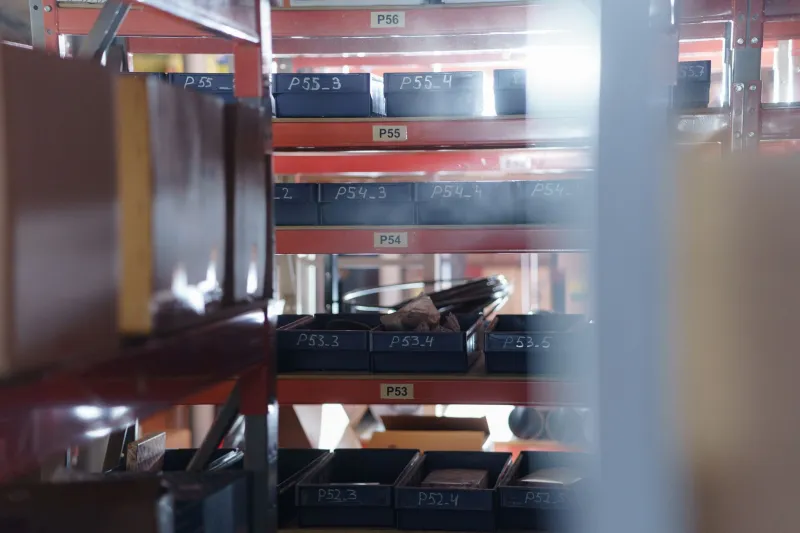
Canada is the second-largest country in the world by land area, yet its population is concentrated in a narrow band near the southern border. This creates a distribution challenge that suppliers and wholesalers pass along, in part, to the end consumer.
A plumbing supply warehouse in Vancouver must ship product to Prince George, Whitehorse, or Yellowknife at a cost that a warehouse in Ohio — surrounded by a dense, interconnected network of distributors — simply does not face. Fuel costs, carrier rates, and the limited competition on certain regional routes all compound over time. In remote and northern communities, this effect is especially pronounced. A homeowner in a small northern Ontario town may pay two to three times more for the same water heater anode rod as someone in the Greater Toronto Area, not because of gouging, but because the logistics chain is genuinely longer and more expensive.
Even within major urban centres, the number of plumbing supply distributors operating in any given market is smaller than in comparable American cities. Fewer competitors generally means less downward pressure on pricing.
Import Tariffs and the Cross-Border Cost Gap
A significant portion of plumbing hardware sold in Canada is manufactured in the United States, China, or Europe and imported through customs. Tariffs and duties apply at various rates depending on the product category and country of origin, and these costs are embedded in the wholesale price before a single item reaches a plumber's van or a retail shelf.
The Canada-United States-Mexico Agreement (CUSMA, formerly NAFTA) has reduced tariff friction on many goods, but it has not eliminated it entirely. Products originating outside North America — including a substantial share of lower-cost fixtures and fittings — still attract duties that American consumers do not pay on the same goods when they are imported directly through U.S. ports of entry.
Currency exchange adds another layer. Because most global plumbing manufacturers price in U.S. dollars, a weaker Canadian dollar translates directly into higher landed costs. When the loonie trades at 72 or 73 cents to the U.S. dollar, as it has for extended periods in recent years, that differential is absorbed somewhere along the supply chain — and it rarely disappears before reaching the homeowner.
How the Material-to-Labour Split Breaks Down
When a licensed plumber presents you with a repair invoice, the total reflects two distinct categories: labour and materials. In Canada, labour typically accounts for the larger share — often between 60 and 75 percent of the total bill for standard repairs — but material costs can shift that balance depending on the nature of the job.
For a simple faucet cartridge replacement, the part itself may cost $30 to $80 at wholesale, while the labour to diagnose and complete the repair might run $120 to $200. The material portion appears modest. However, for a water heater replacement, a pressure-balancing valve installation, or a backflow preventer fitting, the parts can represent 40 to 50 percent of the total. In those cases, the price of the component matters considerably more.
It is worth noting that licensed plumbers typically source materials through wholesale accounts at prices unavailable to the general public. Their markup on materials — which is standard practice and disclosed in most professional estimates — reflects not only the cost of the part but also the time spent sourcing, transporting, and warranting it. That said, homeowners who prefer to supply their own parts for certain repairs should discuss this option with their plumber in advance, as not all contractors will accept homeowner-supplied materials, and doing so may affect warranty coverage.
Regional Pricing Disparities Across Provinces
Material costs are not uniform across Canada. Beyond the rural-versus-urban divide already described, provincial differences in sales tax structures, local distribution networks, and market competition all influence what a plumber — and by extension, a homeowner — pays for parts.
Alberta, which has no provincial sales tax, offers a modest advantage on after-tax costs. British Columbia and Ontario, with their harmonised or combined tax regimes, add a layer of cost that residents of lower-tax provinces do not face. In Atlantic Canada, where supply chains are longer and the local market is smaller, wholesale pricing tends to run higher than in central Canada for equivalent products.
Quebec presents its own dynamics. A strong tradition of local suppliers and a well-developed plumbing trade infrastructure has helped moderate some pricing pressures, though the province's distinct regulatory requirements for certain plumbing components mean that not all nationally available parts are directly interchangeable.
Practical Strategies for Homeowners
While you cannot restructure a national supply chain, there are reasonable steps you can take to manage material costs without compromising the quality or integrity of your repairs.
Request an itemised estimate. Any reputable plumbing contractor should be willing to break down labour and material costs separately. This allows you to understand what you are paying for each component and to ask informed questions.
Compare major fixture purchases independently. For significant replacements — water heaters, toilets, shower valves — you may find competitive pricing through large-format home improvement retailers or direct supply houses. Discuss with your plumber whether they are willing to install owner-supplied equipment, and confirm whether doing so affects their workmanship warranty.
Avoid sourcing critical parts from unverified online retailers. While the internet offers apparent bargains on plumbing hardware, counterfeit and substandard components are a documented problem in the market. A part that fails prematurely creates a far more expensive problem than the original repair.
Plan non-emergency repairs in advance. Rush orders and expedited shipping dramatically increase part costs. When a repair is not urgent, allowing your plumber to source components through standard channels rather than emergency suppliers will reduce the materials line on your invoice.
Ask about warranty and parts sourcing policies. Some plumbing contractors maintain preferred supplier relationships that come with extended warranties on parts. Understanding these policies upfront helps you evaluate the true value of the quote you receive.
The Bigger Picture
The elevated cost of plumbing materials in Canada is not an anomaly or a failure of the market — it is the predictable result of geography, trade economics, and the realities of serving a geographically vast and climatically demanding country. Acknowledging these factors honestly is the first step toward making smarter decisions as a homeowner.
At AGR Plumbing, we believe that transparency around pricing builds trust. When you understand what drives the cost of your repair, you are better positioned to plan, budget, and advocate for yourself throughout the process. If you have questions about an upcoming repair or want to understand what a specific part should reasonably cost in your region, our team is always available to walk you through the details.