When Water Wins: What Canadian Homeowners Get Wrong About Basement Flood Insurance
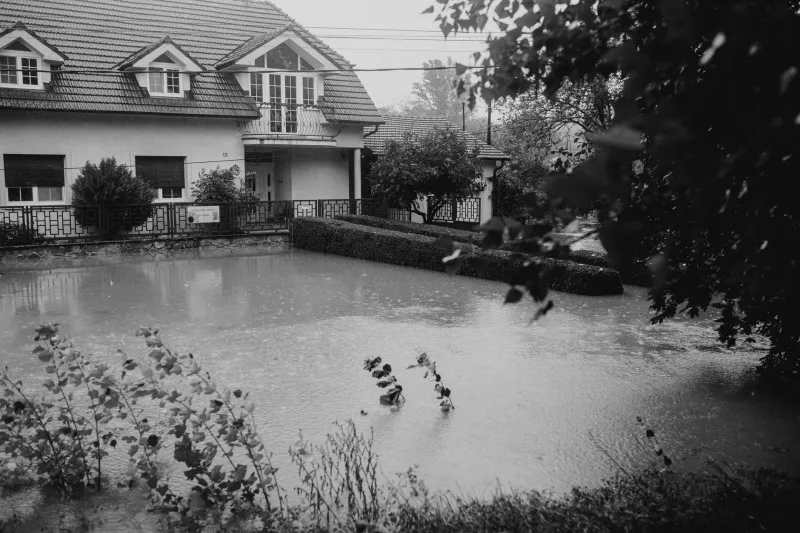
Every spring, and increasingly throughout the summer storm season, tens of thousands of Canadian homeowners descend into their basements to find standing water, ruined drywall, and damaged belongings. The immediate instinct is to reach for the phone and call an insurer. What follows that call, however, often comes as a profound shock: the claim is partially denied, significantly reduced, or rejected outright.
The reason is not fraud or fine print trickery. It is a fundamental misunderstanding of how Canadian home insurance policies categorise water damage — and that misunderstanding costs homeowners hundreds of millions of dollars each year.
The Core Distinction Insurers Draw
Canadian home insurance policies treat water damage as several legally distinct categories, not a single event. The most important division is between water that originates inside your plumbing system and water that enters your home from the outside environment.
A burst supply line, a failed water heater, an overflowing toilet caused by a blocked drain — these are typically classified as sudden and accidental plumbing failures. Standard homeowner policies in Canada generally provide coverage for these events, provided the damage was not the result of long-term neglect or a known issue left unaddressed.
Contrast that with water entering through a foundation crack during a heavy rainfall, a municipal sewer backing up through a floor drain, or surface runoff overwhelming a weeping tile system. These are categorised as overland flooding or sewer backup events, and they are almost universally excluded from standard policies unless the homeowner has purchased specific endorsements.
The Insurance Bureau of Canada has been actively encouraging homeowners to review these gaps, particularly as climate-driven precipitation events become more frequent and severe across the country.
Province-Specific Considerations
While insurance regulation falls under provincial jurisdiction, the coverage landscape varies more subtly than dramatically across Canada. That said, a few regional realities are worth understanding.
In British Columbia, where atmospheric rivers can dump extraordinary volumes of rainfall in short periods, overland flood endorsements have become increasingly sought after — and increasingly expensive. Many Metro Vancouver homeowners have discovered that their coverage was never updated after purchasing an older policy that predates modern sewer backup riders.
In Alberta, the 2013 southern Alberta floods prompted a significant industry-wide reassessment of how overland flooding was handled. The province has since seen broader availability of overland flood coverage as an add-on, though premiums in high-risk zones remain substantial.
In Ontario and Quebec, aging municipal sewer infrastructure in cities like Toronto, Hamilton, and Montréal means sewer backup is a recurring and costly event. Homeowners in these markets should treat sewer backup endorsements as near-essential rather than optional.
In the Prairie provinces and Atlantic Canada, spring snowmelt creates predictable high-risk windows. Homeowners in these regions who have not reviewed their policies before the thaw season are taking a measurable financial gamble.
Why Plumbing Documentation Matters More Than You Think
Even when a claim falls within the covered category, insurers will scrutinise whether the homeowner took reasonable steps to maintain their plumbing system. A burst pipe is covered as a sudden event — but if an adjuster determines that the pipe showed visible corrosion for years, or that a slow leak had been actively ignored, coverage can be disputed or reduced.
This is where proactive plumbing documentation becomes a genuine financial asset.
Consider maintaining a simple home plumbing record that includes:
- Dates of any professional plumbing inspections or service calls
- Records of water heater age and maintenance
- Camera inspection reports for your main sewer line (particularly valuable in older homes)
- Receipts for sump pump installation, testing, or battery backup upgrades
- Photographs of your basement plumbing infrastructure taken during calm, dry conditions
This documentation serves two purposes. First, it demonstrates to an insurer that you have been a diligent homeowner who could not reasonably have anticipated the failure. Second, it provides a clear baseline that can help a plumber or adjuster distinguish between pre-existing conditions and damage caused by the event in question.
The Sump Pump Question
Few pieces of residential plumbing equipment carry more insurance relevance than the sump pump. In many Canadian basements, particularly those in low-lying areas or on lots with high water tables, a functioning sump pump is the primary barrier between a dry basement and a flooded one.
Some insurers now require evidence of a working sump pump — including a battery backup system for power outage scenarios — as a condition of providing sewer backup or water damage coverage. Others offer premium discounts for homes with verified sump pump installations.
If your sump pump is more than seven to ten years old, has never been tested under load, or lacks a battery backup, it represents both a practical vulnerability and a potential coverage complication. A licensed plumber can assess whether your current system is adequate for your property's drainage demands.
Practical Steps Before the Next Storm Season
The window between the end of winter and the beginning of the spring thaw or summer storm season is the ideal time to address these vulnerabilities. AGR Plumbing recommends the following sequence for Canadian homeowners:
- Review your current policy with your broker and ask specifically about overland flood and sewer backup endorsements. If they are absent, request a quote for adding them.
- Schedule a plumbing inspection that includes a visual assessment of your basement drain system, sump pit, and any exposed supply or drain lines.
- Consider a sewer camera inspection if your home is more than 25 years old or if you have never had one performed. Root intrusion and pipe deterioration are common in older Canadian homes and can cause backups that may or may not be covered depending on their origin.
- Test your sump pump by pouring water directly into the pit and confirming the float switch activates the pump reliably.
- Document everything and keep records in a location that would survive a basement flood — a cloud-based storage system or a folder kept on an upper floor.
The Boundary Between Plumbing and Policy
Insurance adjusters are experienced professionals whose job includes identifying the precise origin and cause of water damage. Homeowners who have invested in their plumbing infrastructure and can demonstrate that investment are in a meaningfully stronger position when a claim is filed.
Basement flooding is rarely a simple event. Water finds its way in through multiple pathways simultaneously, and the cause is often a combination of external pressure and internal system failure. Understanding where your plumbing responsibility ends and your policy coverage begins — and actively managing both — is the most effective protection a Canadian homeowner can have.
A trusted plumbing professional is not only a resource for repairs. They are, in a very real sense, a partner in protecting the financial integrity of your home.