From Tank to Tankless: A Canadian Homeowner's Financial Case for Upgrading to Modern Water Heating Technology
For decades, the conventional storage tank water heater occupied a quiet corner of the Canadian utility room, drawing little attention until it failed. Most homeowners replaced it with an identical unit, accepted the modest increase in purchase price, and moved on. That straightforward calculus is now being disrupted by a generation of water heating technology that challenges the assumption that all heaters are essentially equivalent. Tankless systems and heat pump water heaters are not simply incremental improvements — they represent a meaningful shift in the economics of domestic hot water, and for many Canadian households, the financial argument for upgrading has become difficult to ignore.
Why the Conventional Tank System Is Increasingly Difficult to Justify
A traditional storage tank heater maintains a reservoir of hot water around the clock, whether demand exists or not. This continuous heating cycle — often called standby heat loss — accounts for a measurable portion of a home's annual energy expenditure. In Canada, where heating costs are elevated by climate and where energy prices vary considerably by province, this inefficiency compounds over time.
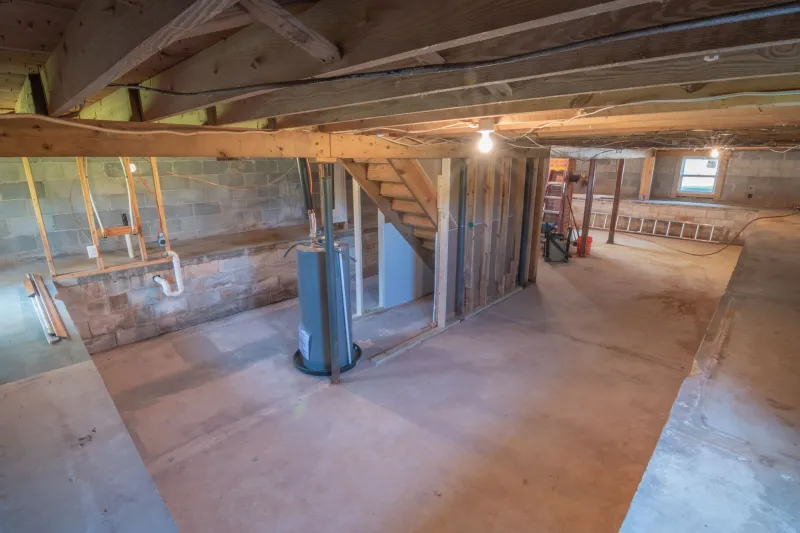
Natural Resources Canada estimates that water heating accounts for roughly 17 to 20 per cent of household energy consumption. For a home relying on a standard gas or electric tank unit operating at 60 to 65 per cent efficiency, a significant portion of that expenditure is lost to ambient heat dissipation rather than delivered to the tap. When a unit is housed in an uninsulated mechanical room or basement — common in older Canadian construction — the losses are further amplified.
The case against the conventional tank is not that it fails to function. It is that newer alternatives function considerably better for a cost differential that, over a realistic ownership horizon, frequently reverses itself.
How Tankless Systems Alter the Equation
Tankless, or on-demand, water heaters eliminate standby losses entirely by heating water only when a tap or appliance calls for it. High-efficiency condensing gas tankless units operate at efficiency ratings of 90 to 98 per cent — a substantial improvement over the 60 to 65 per cent typical of older tank models. Electric tankless units achieve near-perfect efficiency at the point of use, though the upstream efficiency of electricity generation remains a separate consideration.
For a household of three to five people in a mid-sized Canadian city consuming an average volume of hot water, the annual energy savings from switching to a condensing gas tankless unit can range from $150 to $350 depending on local gas rates, usage patterns, and the efficiency rating of the unit being replaced. Over a ten-year ownership period, those savings begin to offset the higher upfront cost, which typically falls between $1,500 and $3,500 installed, compared to $800 to $1,500 for a standard tank replacement.
Payback periods vary, but for households with above-average hot water consumption — larger families, homes with secondary suites, or properties with high-flow fixtures — the crossover point arrives sooner than many homeowners anticipate.
The Heat Pump Water Heater: A Compelling Option for Certain Canadian Climates
Heat pump water heaters represent a different technological approach. Rather than generating heat directly, they extract thermal energy from the surrounding air and transfer it to the water, operating at efficiencies of 200 to 350 per cent — expressed as a Coefficient of Performance, or COP. This means that for every unit of electrical energy consumed, two to three and a half units of thermal energy are delivered to the water.
The trade-off is sensitivity to ambient temperature. Heat pump water heaters perform optimally when installed in spaces that remain above approximately 10 degrees Celsius year-round. In colder Canadian climates — particularly in unheated garages or poorly insulated mechanical rooms in provinces such as Manitoba, Saskatchewan, or northern Ontario — performance degrades during winter months, and some units switch to a less efficient resistance heating mode. Homeowners in British Columbia's Lower Mainland, southern Ontario, or Atlantic Canada generally encounter fewer seasonal performance constraints.
For those in suitable conditions, the energy savings can be substantial. Natural Resources Canada data suggests heat pump water heaters can reduce water heating energy costs by 50 to 70 per cent compared to conventional electric tank units. Given that electric water heating is common in many parts of Atlantic Canada and Quebec, the financial case in those regions is particularly strong.
Regional Incentives That Shift the Numbers
The financial calculus of any water heater upgrade is meaningfully influenced by available rebate and incentive programmes, several of which apply specifically to Canadian homeowners.
The Canada Greener Homes Grant — and its successor programming under the Canada Greener Homes Loan — has provided funding for eligible energy-efficient upgrades, including heat pump water heaters. Provincial programmes add further layers of support. Efficiency Nova Scotia, Énergir in Quebec, Enbridge Gas in Ontario, and BC Hydro each administer rebate structures for qualifying high-efficiency water heating equipment. Rebate amounts for heat pump water heaters have ranged from $250 to over $1,000 depending on the programme and unit specifications.
Homeowners should verify current programme availability directly with their provincial utility or energy efficiency authority, as funding windows open and close and eligibility criteria are periodically revised. A licensed plumber familiar with local incentive structures can often assist in identifying applicable programmes at the time of installation.
Installation Considerations That Affect Both Cost and Performance
The financial outcome of a water heater upgrade depends not only on the unit itself but on the conditions of installation. Tankless gas systems typically require a dedicated gas line of adequate capacity, direct-vent or power-vent exhaust routing, and in some cases an upgraded gas metre — particularly in older homes where the existing infrastructure was sized for a simpler appliance load. These ancillary costs, which can range from several hundred to over a thousand dollars, must be factored into any honest payback calculation.
Heat pump water heaters require adequate space — generally a minimum of 28 to 30 cubic metres of surrounding air volume — as well as a floor drain for condensate and appropriate electrical service. In homes where these conditions are not naturally present, retrofitting adds cost and complexity.
Proper sizing is equally important. An undersized tankless unit will struggle to meet simultaneous demand from multiple fixtures, leading to comfort complaints and, in some cases, premature component wear. A licensed plumber should conduct a load assessment before recommending a specific unit capacity.
Making an Informed Decision
The decision to upgrade a water heater is not purely about technology preference. It is a financial decision that benefits from a structured analysis: the current unit's age and efficiency rating, local energy costs, household consumption patterns, available incentives, and the specific installation requirements of the property in question.
For homeowners whose conventional tank is approaching the end of its serviceable life — typically 10 to 15 years — the replacement moment represents a natural opportunity to evaluate alternatives rather than default to a like-for-like swap. In many cases, the incremental investment in a higher-efficiency system will be recovered within five to eight years, with continued savings extending well beyond that horizon.
At AGR Plumbing, our approach to water heater consultations begins with the specifics of your home, your province, and your usage profile. The right system is not always the most advanced one — it is the one that delivers reliable performance, qualifies for available incentives, and returns measurable value over its operational life. That determination is best made with accurate information and professional guidance rather than assumptions inherited from a previous generation of equipment.