What Builder-Grade Plumbing Is Quietly Costing Canadian Homeowners — And When to Replace It
There is a particular kind of disappointment that comes with owning a newer home. The paint is fresh, the finishes look modern, and yet something keeps going wrong — a faucet that drips after two years, a showerhead with disappointing pressure, a water heater that underperforms in winter. These are not random failures. They are the predictable consequences of a construction industry that has, for decades, optimised new home plumbing for installation cost rather than long-term performance.
This is not a criticism of any individual builder. It is an honest acknowledgement of how production homebuilding works across Canada. When a developer is managing hundreds of units simultaneously, every dollar saved on a faucet or a valve multiplies significantly. The result is plumbing infrastructure that is code-compliant, functional at handover, and quietly inadequate over time.
Understanding where those inadequacies lie — and when to address them — allows Canadian homeowners to make strategic, cost-effective decisions rather than reactive, expensive ones.
The Builder-Grade Mindset: What It Means in Practice
"Builder grade" is not an official designation. It refers informally to the category of plumbing fixtures, fittings, and components that occupy the lowest tier of quality while still satisfying minimum code requirements. In practical terms, this means:
- Faucets and fixtures made with plastic internal components rather than solid brass or ceramic disc cartridges, resulting in faster wear and more frequent dripping
- Water heaters sized to minimum capacity, often with lower first-hour ratings than a family's actual peak demand requires
- Pressure-balancing valves in showers that meet code but offer limited temperature precision or longevity
- Shut-off valves throughout the home that use compression or low-grade ball mechanisms that seize or fail when actually needed
- Toilet fill valves and flappers that begin degrading within the first few years, contributing to phantom flushing and slow leaks
- Supply lines connecting fixtures to shut-offs, often made with low-quality braided steel over plastic rather than reinforced rubber or stainless-wrapped construction
Individually, none of these items represents a crisis. Collectively, they represent a home that will require increasing maintenance attention within five to fifteen years of construction — precisely when many Canadian homeowners believe their plumbing should still be in its prime.
Lifespan Realities by Component
Before establishing an upgrade timeline, it is useful to understand realistic performance windows for common builder-grade plumbing components under Canadian conditions. Climate plays a significant role: the freeze-thaw cycle, hard water in many regions, and the demands of cold-climate water heating all accelerate wear relative to milder climates.
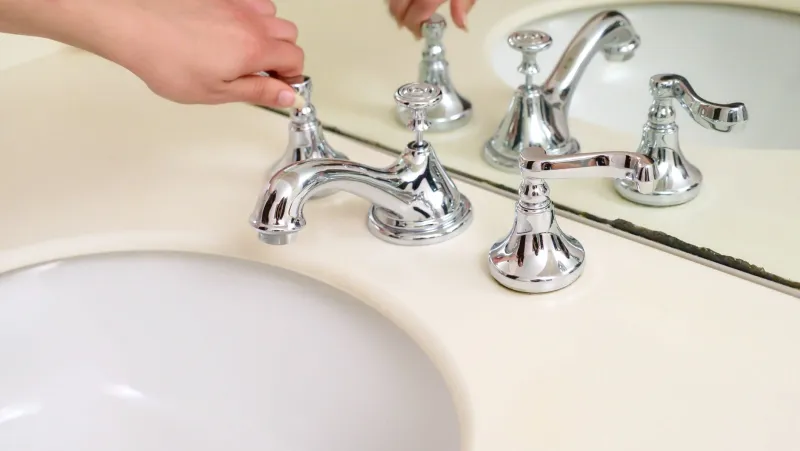
Faucets and mixing valves: Builder-grade faucets with plastic cartridges typically begin showing wear — dripping, stiff handles, inconsistent temperature — within five to eight years. Shower mixing valves may last slightly longer but become increasingly difficult to service as parts become unavailable.
Toilets: The porcelain itself is durable, but the internal mechanisms — fill valves, flappers, flush valves — in builder-grade toilets are generally functional for three to seven years before requiring replacement. The good news is that these components are inexpensive to replace and can be upgraded to higher-quality parts without changing the toilet itself.
Water heaters: Builder-installed tank water heaters are almost universally entry-level models. In Canadian homes with hard water — which describes a significant portion of the country, including much of Ontario, Alberta, and the Prairie provinces — sediment accumulation shortens effective lifespan. Expect eight to twelve years rather than the manufacturer's stated maximum, particularly without annual flushing.
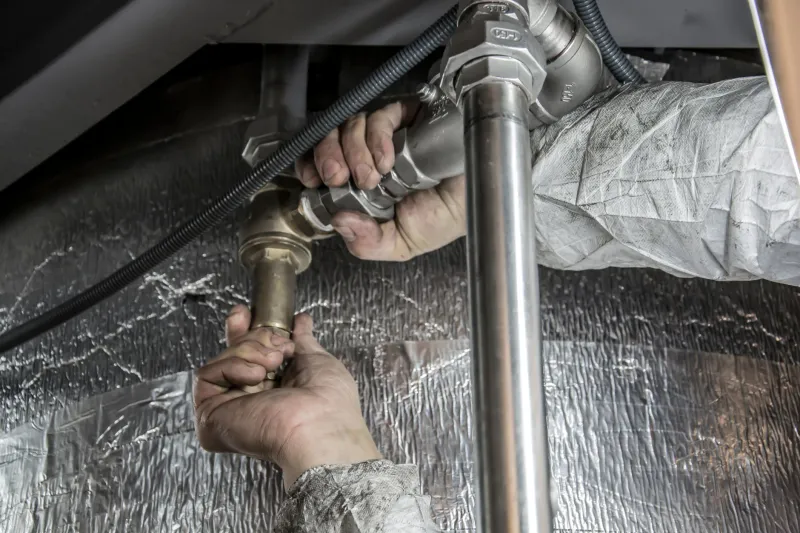
Supply lines (flexible connectors): The braided supply lines connecting shut-off valves to toilets, faucets, and appliances are among the most underappreciated failure points in residential plumbing. Low-quality versions can fail within ten years, and a failed supply line under pressure causes immediate and significant water damage. This is one area where proactive replacement pays clear dividends.
Shut-off valves: Compression-style shut-off valves — still common in older new construction — often seize after years without use. When a plumber attempts to close one during an emergency or repair, it may fail to seal or break entirely. Quarter-turn ball valves are substantially more reliable and should be installed wherever a shut-off is replaced.
PEX supply piping: Many newer Canadian homes use PEX tubing for supply lines, which is generally a positive development. However, the quality of fittings and the installation methodology matter considerably. Crimp-ring connections using lower-grade fittings can develop slow leaks at joints over time, particularly in high-pressure situations.
A Prioritised Upgrade Timeline
Not all upgrades are equally urgent, and budget constraints are real. The following framework helps Canadian homeowners sequence their investments logically.
Years One Through Five: Address Vulnerabilities, Not Aesthetics
In the first years of homeownership, the priority is identifying and correcting the components most likely to cause sudden, damaging failures — not cosmetic improvements.
- Inspect and replace braided supply lines on all toilets, faucets, and the dishwasher. This is inexpensive work that eliminates a significant flood risk.
- Test all shut-off valves by closing and reopening them. Valves that are stiff, that do not fully close, or that show corrosion should be replaced with quality quarter-turn ball valves.
- Flush your water heater to remove sediment, particularly if you are in a hard water region. If the unit is already five or more years old at purchase, begin planning for replacement.
- Install a water softener or treatment system if your municipal water supply is hard. This single investment extends the life of virtually every plumbing component in your home and improves the performance of water-using appliances.
Years Five Through Ten: Fixtures and Functional Upgrades
By this point, builder-grade faucets and shower valves are entering their wear phase. Addressing them now, rather than waiting for failure, allows for planned rather than emergency expenditure.
- Replace faucet cartridges in any fixture showing inconsistent temperature, stiff operation, or dripping. If the faucet body is low quality, consider full replacement with a mid-to-upper-grade fixture.
- Upgrade shower mixing valves to thermostatic models if your current pressure-balancing valves are inconsistent or difficult to adjust. This is particularly valuable in homes with multiple simultaneous water users.
- Assess toilet internals and replace fill valves and flappers with quality aftermarket components if the originals are showing wear.
- Consider a water heater upgrade. If your builder-installed tank unit is approaching ten years, replacing it before failure allows you to choose the right technology — whether a high-efficiency tank, heat pump water heater, or tankless system — rather than accepting whatever is available on short notice.
Years Ten Through Twenty: Systemic Review
A home in this age range has typically revealed its plumbing character. Persistent issues — recurring clogs, inconsistent pressure, water quality changes — should be investigated systemically rather than addressed as isolated incidents.
- Commission a professional plumbing inspection, including a camera inspection of the main drain line if one has not been performed. Root intrusion, joint separation, and sediment buildup are common in this age range.
- Review shut-off valve condition throughout the home. Any compression-style valve not already replaced should be addressed now.
- Assess bathroom plumbing for a coordinated upgrade if multiple fixtures are showing wear simultaneously. Addressing an entire bathroom at once is more economical than replacing individual components across multiple service calls.
- Consider whole-home water filtration if you have not already addressed water quality. The cumulative effect of years of hard or chemically treated water on fixtures and appliances is measurable.
The Case for Acting Before Failure
The reactive approach to home plumbing — waiting until something breaks before addressing it — is the most expensive approach available. Emergency service calls carry premium rates. Water damage from a failed supply line or a seized shut-off can cost tens of thousands of dollars. And the disruption of an unplanned repair is always greater than that of a scheduled one.
Builder-grade plumbing is not a defect. It is a starting point. Canadian homeowners who treat it as such, and who invest strategically in upgrades over time, will find that their homes perform reliably, efficiently, and with far fewer unpleasant surprises than those who simply wait for the next thing to go wrong.