Ten Common Plumbing 'Fixes' That Canadian Homeowners Should Stop Attempting Immediately
There is no shortage of plumbing advice available to Canadian homeowners. Online forums, social media videos, and decades-old neighbourhood wisdom all offer confident solutions to leaking taps, blocked drains, and fluctuating water pressure. The problem is that a great deal of this advice is either outdated, oversimplified, or outright incorrect — and acting on it can transform a minor inconvenience into a costly repair bill.
At AGR Plumbing, we understand the DIY impulse entirely. No one wants to wait for a technician when a simple fix seems within reach. But the calls we receive most frequently are not from homeowners who ignored a problem — they are from homeowners who tried to solve it themselves and made things considerably worse. What follows is a frank look at ten plumbing myths that continue to circulate across Canada, and what you should do instead.
1. Pouring Chemical Drain Cleaners Down a Blocked Drain
Chemical drain cleaners are among the most aggressively marketed plumbing products on the market, and they are also among the most misunderstood. These products rely on highly caustic compounds — typically lye or sulphuric acid — to dissolve organic material. While they may temporarily clear a slow drain, they do not discriminate between the clog and the pipe itself. In older homes with PVC or corroded metal pipes, repeated use of chemical cleaners accelerates deterioration. They also pose a genuine safety hazard when mixed with other household cleaning products. A drain snake or a professional hydro-jetting service will resolve the underlying blockage without damaging your plumbing infrastructure.
2. Tightening a Leaking Tap as Far as It Will Go
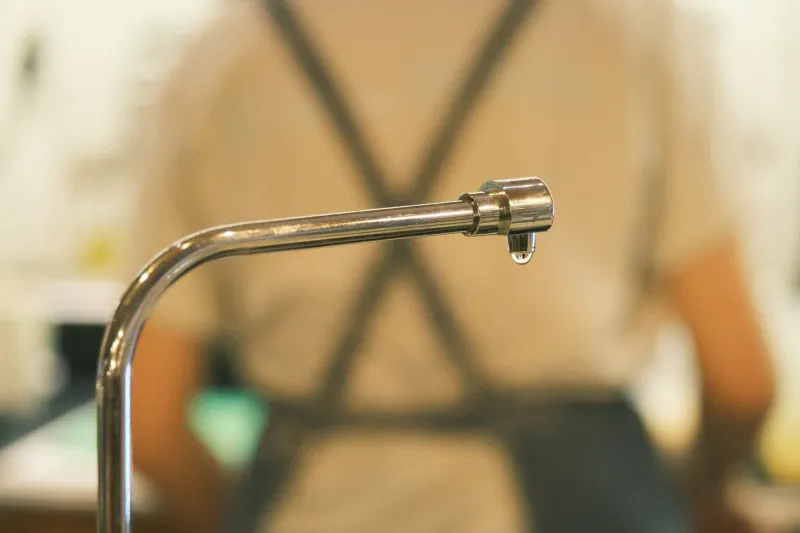
When a tap begins to drip, the instinct is to turn it off more firmly. This rarely solves the problem and frequently worsens it. Forcing a tap handle compresses the washer or cartridge beyond its design tolerance, accelerating wear and sometimes cracking internal components entirely. The correct approach is to replace the washer, O-ring, or cartridge — a relatively simple repair, but one that requires turning off the water supply and understanding which components are compatible with your specific fixture.
3. Using Plumber's Tape as a Permanent Seal
PTFE tape, commonly called plumber's tape or thread seal tape, serves a specific and limited purpose: it seals threaded pipe connections against minor leaks. It is not a substitute for proper pipe repair, and applying it over a cracked fitting or a corroded joint will not hold under sustained water pressure. Canadian winters, with their dramatic temperature fluctuations, place considerable stress on plumbing connections. A fitting wrapped in tape that fails at two in the morning during a January cold snap is a far more expensive problem than the original leak.
4. 'Resetting' a Water Heater to Restore Hot Water
When hot water becomes inconsistent or disappears entirely, many homeowners locate the reset button on their electric water heater and press it, assuming this resolves the issue. In some cases, a tripped reset button is simply the result of a temporary power fluctuation and resetting it is appropriate. However, the reset mechanism exists as a safety feature — it trips when the water temperature exceeds a safe threshold. If the button trips repeatedly, the underlying cause is almost certainly a failing thermostat, a defective heating element, or sediment buildup that is forcing the unit to overwork. Resetting the button without addressing the root cause means the heater will continue operating in a compromised state, potentially shortening its lifespan significantly.
5. Ignoring a Running Toilet Because It Seems Minor
A toilet that runs continuously after flushing is not a trivial inconvenience — it is a water loss problem. Depending on the severity of the fault, a running toilet can waste between 200 and 1,000 litres of water per day. Across a Canadian winter or a dry summer, this adds up to a meaningful increase on your utility bill. The fault is usually a worn flapper valve or a misadjusted float, both of which are inexpensive components. The issue is that homeowners who attempt to adjust the float without understanding the mechanism often miscalibrate it, causing the toilet to either run constantly or fail to fill adequately.
6. Using Expanding Foam to Seal Pipe Penetrations in Exterior Walls
Expanding spray foam is a useful product for many home improvement tasks, but it is frequently misapplied around plumbing pipe penetrations in exterior walls. While it does provide some insulation value, it is not a substitute for properly fitted pipe insulation sleeves, and it can actually trap moisture against the pipe surface — an invitation for corrosion or, in unheated spaces, for ice formation. In Canadian climates where exterior wall temperatures can drop well below freezing, proper pipe insulation and air sealing around penetrations must be done correctly the first time.
7. Pouring Boiling Water Down a Frozen Pipe
This is one of the more hazardous myths on this list. When a pipe freezes, the ice inside creates significant internal pressure. Introducing boiling water — particularly on PVC pipes — can cause the pipe to crack or shatter, and it can also scald anyone nearby if the steam or water rebounds unexpectedly. The recommended approach is to apply gentle, consistent heat using a hair dryer or an electric heating pad, starting from the end of the pipe nearest the open tap and working back toward the frozen section. If the pipe is not accessible or if you are unsure of its location, contact a licensed plumber before attempting anything.
8. Assuming Low Water Pressure Is Just a Municipal Issue
When water pressure drops noticeably, many homeowners contact their municipality first and assume the problem originates outside the home. While municipal supply issues do occur, low water pressure within a single property is far more frequently caused by internal factors: partially closed shut-off valves, sediment buildup in aerators, a failing pressure regulator, or early signs of pipe corrosion. Assuming the issue is external delays diagnosis and allows whatever internal problem exists to progress unchecked.
9. Replacing a Showerhead Without Checking the Supply Line
Installing a new showerhead is one of the genuinely manageable DIY plumbing tasks — provided the existing supply arm and shut-off are in good condition. The mistake many homeowners make is applying excessive force to a corroded or brittle supply arm while attempting to remove the old showerhead. This can shear the arm at the wall, which requires opening the wall cavity to replace it. Always inspect the supply arm for corrosion before applying torque, and if there is any doubt about its condition, have a plumber assess it first.
10. Treating All Drain Clogs the Same Way
Not every blocked drain has the same cause, and the tools and techniques appropriate for a bathroom sink clog are not necessarily appropriate for a main sewer line blockage. Homeowners who use a standard plunger or drain snake on a sewer line obstruction — particularly one caused by root intrusion or a collapsed section of pipe — may temporarily shift the blockage without resolving it, or may damage the line further. Persistent clogs that affect multiple fixtures simultaneously, or that return quickly after clearing, should be evaluated with a camera inspection before any further intervention.
When to Step Back and Call a Professional
The distinction between a manageable DIY task and a job requiring professional expertise is not always obvious, and that ambiguity is precisely what makes plumbing myths so persistent. A general principle worth following: if the repair requires shutting off the main water supply, opening a wall or floor cavity, or working with gas lines connected to water heating equipment, the task warrants a licensed plumber.
Canadian building codes exist for good reason, and many plumbing repairs require permits and inspections to ensure the work meets safety standards. Unlicensed repairs that fail inspections — or that cause damage to neighbouring units in a condominium or multi-family building — carry both financial and legal consequences.
At AGR Plumbing, our goal is not to discourage homeowners from taking an active interest in their plumbing systems. Quite the opposite — an informed homeowner who understands how their system works is far better positioned to identify problems early and communicate clearly with a technician. The key is knowing which tasks are genuinely within reach and which ones are better left to someone with the training, tools, and liability coverage to do them properly.