Beyond the Invoice: The Full Financial Toll of Unresolved Plumbing Problems in Canadian Homes
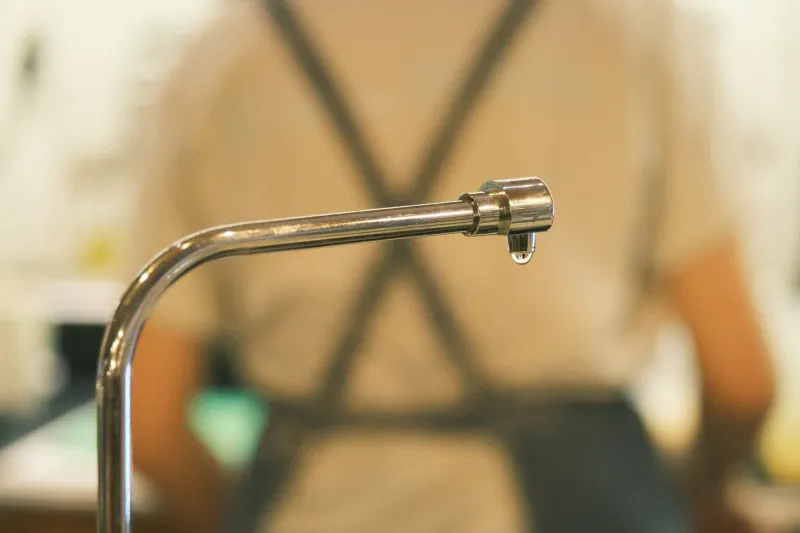
When a pipe begins to drip or a water heater shows early signs of failure, the instinct for many homeowners is to weigh the immediate repair cost against the apparent urgency of the problem. If water is still flowing and the leak seems minor, the temptation to defer professional intervention is understandable. What that calculation consistently fails to account for, however, is the layered financial damage that accumulates in the background—damage that rarely announces itself until it has already become extraordinarily expensive to address.
Across Canada, where climate extremes, aging housing stock, and regional water quality variations all place unique stress on residential plumbing systems, the gap between a manageable repair and a catastrophic loss can close faster than most homeowners expect.
The Deceptive Cost of Water Damage
Water is patient. It finds pathways through materials that appear solid, migrates along joists and subfloor assemblies, and saturates insulation long before any visible staining appears on a ceiling or wall. By the time a homeowner notices discolouration or warping, the moisture has typically been present for weeks or months.
The remediation costs that follow are rarely modest. Depending on the extent of saturation and the materials involved, water damage restoration in Canada commonly ranges from $2,500 to $25,000 or more. Drywall removal, subfloor replacement, structural drying equipment, and the disposal of contaminated materials all contribute to totals that dwarf the original plumbing repair. In older homes—particularly those built before the 1980s—the discovery of water intrusion can also trigger mandatory inspections for asbestos-containing materials, adding further cost and complexity to the remediation process.
A slow leak beneath a kitchen sink or behind a bathroom vanity, left unaddressed for a single season, can compromise cabinetry, flooring, and the structural integrity of the surrounding framing. What might have been resolved with a $200 fixture replacement becomes a multi-trade restoration project.
Mould: The Invisible Multiplier
Where moisture persists, mould follows. In Canadian climates—particularly in regions with high humidity during summer months or significant temperature fluctuations—the conditions for mould growth can develop within 24 to 48 hours of a moisture event. What makes mould particularly costly is not merely its presence, but the regulatory and health-related requirements governing its removal.
Professional mould remediation in Canada typically begins at $500 for minor, contained growth and can escalate to $10,000 or beyond when the contamination has spread through wall cavities, HVAC ductwork, or structural materials. In some provinces, significant mould remediation must be conducted by certified professionals and documented to satisfy both insurance requirements and future real estate disclosure obligations.
For families with young children, elderly residents, or individuals with respiratory conditions, the health implications of mould exposure introduce costs that extend well beyond the home itself—including medical consultations, air quality testing, and temporary relocation during remediation.
Insurance: When Coverage Falls Short
Many Canadian homeowners assume their home insurance policy provides a reliable safety net for plumbing-related losses. The reality is considerably more nuanced. Most standard policies distinguish sharply between sudden, accidental water damage and damage resulting from gradual leaks or maintenance neglect. A pipe that bursts without warning may be covered; a slow leak that developed over months because a corroded fitting was never replaced likely will not be.
Even when a claim is approved, the financial consequences extend beyond the deductible. Filing a water damage claim in Canada—particularly a second claim within a policy period—can result in premium increases of 15 to 40 percent at renewal, or in some cases, difficulty securing coverage with preferred insurers altogether. The long-term cost of a single avoidable claim can therefore represent thousands of dollars in elevated premiums over subsequent years.
Understanding what your policy covers, and more importantly what it excludes, is an essential component of responsible home ownership. Many insurers now offer premium reductions for homes with monitored water leak detection systems—a worthwhile investment that simultaneously reduces risk and insurance costs.
Property Value: The Silent Depreciation
Real estate transactions in Canada require sellers to disclose known material defects, and water damage history is among the most scrutinised items in any home inspection report. Even after remediation has been completed and professionally documented, evidence of past moisture intrusion can reduce buyer confidence, invite lower offers, and extend time on market.
In competitive markets, a home with a documented history of plumbing failures or water damage may be valued at three to eight percent below comparable properties without such history. On a home assessed at $650,000—a figure that represents a modest estimate in many Canadian urban centres—that discount translates to $19,500 to $52,000 in lost equity. The financial logic of preventative plumbing maintenance becomes considerably clearer when viewed against numbers of this magnitude.
The Compounding Effect of Deferred Maintenance
Individual plumbing components do not fail in isolation. A corroded shut-off valve that goes unserviced places additional strain on the supply line it controls. A water heater operating beyond its service life works harder to maintain temperature, accelerating wear on associated fittings and connections. A drain line with partial blockage creates back-pressure that stresses pipe joints upstream.
This compounding dynamic is particularly pronounced in Canadian homes that experience freeze-thaw cycles. Plumbing that enters winter already weakened by corrosion, sediment accumulation, or deferred maintenance is disproportionately vulnerable to the expansion pressures that frozen water exerts. A pipe that might have held for another season under normal conditions may fail catastrophically when subjected to the additional stress of a cold snap.
Routine professional inspections—conducted annually or biannually depending on the age and condition of the home—interrupt this compounding process. A licensed plumber identifying and addressing minor issues during a scheduled visit prevents the cascading sequence of failures that transforms manageable maintenance into emergency intervention.
Calculating the True Return on Preventative Investment
Framing plumbing maintenance as an expense rather than an investment is a perspective that costs Canadian homeowners considerably more than the maintenance itself. A comprehensive annual plumbing inspection typically costs between $150 and $350, depending on the size of the home and the scope of the assessment. That expenditure, when it prevents a single water damage event, delivers a return measured not in percentages but in multiples.
The arithmetic is straightforward: a $250 inspection that identifies a failing water supply line and prompts a $400 replacement prevents a potential $8,000 to $15,000 remediation scenario. It also preserves insurance standing, protects property value, and eliminates the disruption and stress of emergency repairs—costs that are real even when they resist precise quantification.
A Practical Path Forward
For Canadian homeowners, the most effective approach to managing plumbing-related financial risk combines three elements: regular professional inspections, prompt attention to early warning signs, and a clear understanding of insurance policy terms.
Water stains, unexplained increases in water bills, reduced pressure, slow drains, and unusual sounds from pipes or fixtures are all signals that warrant professional assessment rather than a wait-and-see approach. Each of these indicators represents a system communicating stress before that stress becomes structural failure.
The cost of a service call, viewed in isolation, can seem like an inconvenient expense. Viewed against the full spectrum of financial consequences that unresolved plumbing problems carry—remediation, insurance implications, property value erosion, and the compounding effect of deferred maintenance—it is, consistently and reliably, the least expensive option available.