Middle of the Night, or Monday Morning? A Homeowner's Guide to Plumbing Triage
Photo: jurvetson, CC BY 2.0, via Wikimedia Commons
Every plumber in Canada has taken the 2 a.m. call for a dripping faucet, and every homeowner has eventually paid an emergency call-out fee for something that, in hindsight, could have waited for Tuesday. Emergency rates — often 1.5 to 3 times standard hourly pricing, plus after-hours premiums — make triage a financial skill worth developing.
The question is never just "is this a problem?" It's "is this a problem that gets worse by the hour?" Here's how to answer it.
Call Immediately: The Non-Negotiables
1. Burst or split supply pipes. A pressurised water line releasing even a modest flow can dump hundreds of litres into a wall cavity in an hour. In winter, a burst pipe in an exterior wall is an unambiguous emergency — shut off the main and call right away.
2. Sewage backing up into the home. Water or waste appearing in floor drains, basement showers, or multiple fixtures simultaneously indicates a main line blockage. Beyond the damage, this is a health hazard. Raw sewage in a living space is not a wait-and-see situation.
3. No water in the entire house. If every fixture runs dry and neighbours have water, a main valve, pressure-reducing valve, or supply line may have failed. In winter, this could also indicate a frozen service line — which can progress to a burst.
4. Water heater failure with active leaking. A tank that is actively discharging water cannot be repaired; it must be drained and replaced. In a Canadian January, going without hot water is more than an inconvenience — and a leaking tank sitting on a wooden floor is actively doing damage.
5. Any suspected gas line issue or a water heater pilot that smells of gas. Not strictly our trade's emergency alone, but if you smell gas, leave the house and call the gas utility's emergency line first, then your plumber.
Safe to Wait Until Morning
1. A single slow-draining sink. One slow drain usually means a localised clog of hair, grease, or soap. Try a plunger or a drain snake. If multiple drains slow down at once, escalate — that pattern suggests a main line problem.
2. A running or leaking toilet. Annoying and wasteful, but contained. Shut off the fixture's angle stop valve (the small valve on the supply line below the tank) and address it during business hours.
3. A dripping faucet. Same principle: close the fixture's shutoff valves under the sink and schedule a repair. The waste is real but measured in dollars, not structural damage.
4. A dripping water heater T&P or weeping fitting without active flooding. Monitor it, place a drain pan or towels underneath, and book the earliest standard appointment.
5. Low water pressure affecting one fixture. Often a clogged aerator — a five-minute DIY fix. Only escalate if the problem spreads.
Before the Plumber Arrives: Protect the House
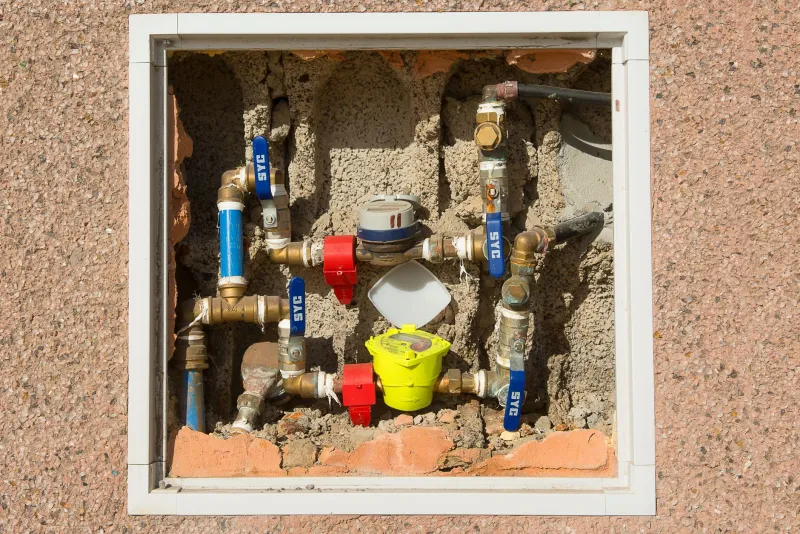
Know your main shutoff now. In most Canadian homes it's in the basement near where the service line enters, often beside the water meter. Every adult in the household should be able to find and operate it. If you've never located it, do it today.
Turn off fixture-level valves when possible. Every toilet and most sinks have individual shutoffs. Closing them isolates the problem without darkening the whole house.
Drain the system after a main shutoff. Open the lowest faucet in the house — usually a basement sink — to relieve pressure and empty remaining water from the lines.
Move what matters. Rugs, electronics, boxes, and furniture out of the affected area. Photograph everything for insurance purposes before you start moving anything.
In winter, protect against freezing. If the water is off for an extended period in cold months, open faucets to drain lines and keep interior doors open to circulate warm air toward vulnerable plumbing.
Kill power to affected areas if water is near outlets. If water is approaching electrical outlets or appliances, shut off the relevant breaker before wading in.
The Grey Zone
Some situations require judgment. A ceiling stain that grows by the hour means an active leak above — treat it as urgent. A sewer smell without visible backup warrants a same-day call, not an emergency one. A sump pump that stops working during heavy rain or spring thaw is urgent in April and routine in August.
When in doubt, call and describe the situation honestly. A reputable plumbing company will tell you whether it can wait — and at AGR Plumbing, we'd rather give you an honest "book Tuesday" than an expensive midnight visit you didn't need. Keep our number with your main shutoff location, and you'll be ready for whichever kind of night it turns out to be.