Where Your Water Dollars Disappear: Auditing Hidden Waste in Canadian Homes
Most Canadian homeowners assume their water bill is fixed — a number determined by household size and little else. In practice, a surprising share of what flows through the meter never gets used productively. It leaks, seeps, or struggles through fixtures choked with decades of mineral deposits.
For homes on municipal water in cities like Toronto, Calgary, or Ottawa, the losses are financial. For households on wells, the cost shows up in pump wear and hydro bills instead. Either way, the waste is real, measurable, and largely fixable.
The Scale Problem Hard Water Creates
Much of southern Ontario, the Prairies, and interior British Columbia sit on hard water — groundwater rich in calcium and magnesium. Every time hot water runs, those minerals precipitate out and bond to heating elements, valve seats, and fixture openings.
A showerhead that has accumulated even a millimetre of scale can lose 15 to 25 percent of its flow efficiency, forcing longer showers to achieve the same result. A kettle tells the story in miniature: the white crust you scrub out of it is exactly what lines your hot water tank, your faucet aerators, and the fill valve of your toilet.
Scale on a water heater element acts as insulation, meaning the unit draws more electricity or gas to heat the same volume of water. Over a year, that inefficiency alone can add $50 to $150 to utility costs for a family of four, depending on local hardness levels.
The Toilet: Your Home's Quietest Expense
Toilets deserve special attention because they fail silently. A worn flapper valve doesn't announce itself with a puddle; it simply lets water trickle from tank to bowl continuously.
A moderate toilet leak can waste 200 to 400 litres per day. At typical Canadian municipal rates, that is roughly $150 to $400 per year for a single leaking toilet — often visible only as an unexplained bump on the water bill.
Older single-flush toilets installed before the mid-1990s use 13 to 20 litres per flush. Modern dual-flush and WaterSense-rated models use 4.5 litres or less. For a household of four flushing five times daily per person, upgrading can save 30,000 to 50,000 litres annually.
A DIY Water Audit Checklist
Set aside one hour on a weekend and work through the following:
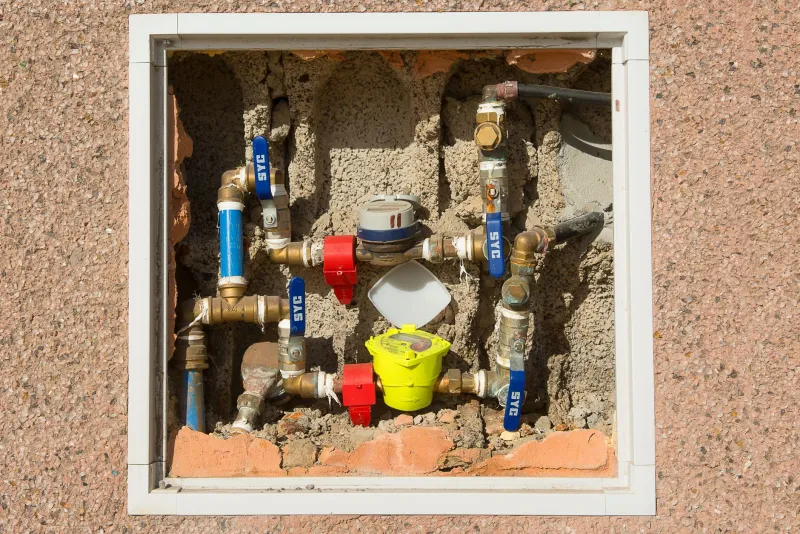
- The meter test. Note your water meter reading, ensure no water is used for two hours, then check again. Any movement indicates a leak somewhere in the system.
- Toilet dye test. Place a few drops of food colouring in each tank. If colour appears in the bowl within 15 minutes without flushing, the flapper is leaking.
- Fixture inspection. Check every faucet, showerhead, and supply line connection for drips, moisture, or mineral crust. Photograph problem spots.
- Aerator check. Unscrew faucet aerators and showerheads. Soak them in white vinegar overnight to dissolve scale, or replace them if flow remains weak.
- Hot water tank review. If your tank is over ten years old and heavily scaled, factor its efficiency loss into your budget planning.
- Outdoor taps. In spring, verify hose bibs didn't suffer winter damage — a cracked hose bib can leak continuously once pressurised.
What the Waste Costs, Roughly
Estimates vary by municipality, but as a planning framework for a four-person household:
- One dripping faucet (one drip per second): approximately 25 litres per day, or $30–$60 per year
- One leaking toilet flapper: $150–$400 per year
- Scaled fixtures throughout the home: $100–$250 per year in extended use and heating inefficiency
- Pre-1995 toilets: $200–$400 per year in excess water versus modern models
Larger households see these figures scale upward. Smaller households shouldn't be complacent either — leaks don't care how many people live in the house.
When Upgrades Pay for Themselves
Not every efficiency investment makes sense. Prioritise based on payback:
- Flapper and fill valve replacement: under $50 in parts; pays back within months if a leak exists. This is the single highest-return fix on the list.
- Aerator replacement and descaling: minimal cost, immediate improvement.
- Toilet replacement: $300–$800 installed, with payback in three to six years for high-use households — faster where water rates are rising, as they are in most Canadian cities.
- Water softener installation: $1,500–$3,500. Payback depends heavily on local hardness. In hard-water regions, the combined savings on heating efficiency, soap usage, and fixture longevity can justify the cost over eight to twelve years, while protecting new fixtures from repeating the scale cycle.
- Tankless or high-efficiency water heating: longer payback, but the scale-reduction benefit compounds it in hard-water areas.
Start With Measurement, Not Purchases
The most common mistake homeowners make is buying solutions before diagnosing problems. Run the audit first. If your meter is still and your toilets pass the dye test, your inefficiency is probably gradual — scale and ageing fixtures — rather than an active leak.
Water rates across Canada have risen faster than general inflation for years, and that trend shows no sign of reversing. Every litre you stop wasting today is a litre you'll never pay the increased rate on tomorrow. A one-hour audit is the cheapest plumbing investment you will ever make.